
- Leverage natural inflation hedges like real assets in portfolios to protect against rising wage costs.
- Demographic shifts necessitate a greater focus on labor-saving technologies, reducing dependency on scarce talent.
- Adopt a multi-faceted approach to investment that includes demographic insights and inflation forecasts.
- Evaluate emerging markets for favorable demographic profiles and labor cost advantages.
- Invest in reskilling initiatives within organizations to adapt to the changing workforce dynamics.
“In macro investing, being early is indistinguishable from being wrong. Timing is the ultimate alpha.”
What Macro-Economic Context & Structural Imbalances Are Influencing Inflation?
The global economy is currently a playing field for complex and dynamic demographic and labor trends, significantly influencing inflationary trajectories. I observed that these elements introduce profound structural imbalances within economies. In particular, aging populations and declining fertility rates in advanced economies foster a significant reallocation of labor resources. These factors create a leverage point for wage inflation, given the supply-side constraints imposed by decreasing labor force participation.
Additionally, surging automation and technology adaptation encapsulate a dual paradox. While reducing labor demand in traditional sectors, they escalate the need for skilled human capital, which is relatively scarce. These imbalances cultivate a breeding ground for persistent wage inflation.
Bureau of Labor Statistics (BLS) asserts a pivotal demographic contribution to these trends. Emerging markets experience population booms, in stark contrast to the workforce attrition seen in developed nations. This bifurcation dictates cross-border inflation dynamics and labor cost disparities.
“The tight labor markets and demographic shifts are altering inflation paradigms, demanding an agile response from fiscal and monetary policies.” – International Monetary Fund (IMF)
How Do These Trends Quantitatively Impact Asset Pricing?
The quantitative ripples through asset pricing are multifaceted and intricate. The labor-induced inflationary environment leads to recalculated discount rates, affecting fixed-income instruments through upward pressure on yields and a consequent diminution of bond prices. Convexity risk becomes pronounced in this milieu, as changes in interest rates exhibit nonlinear effects on bond valuations.
In equity markets, inflation expectations drive equity risk premia adjustments. Companies within sectors reliant on adjustable labor input costs encounter margin compression, affecting their valuation multiples. Conversely, sectors with significant pricing power or those hedged through commodity-linked revenue streams stand to benefit.
The commodities market observes a compelling transformation through contango and backwardation phenomena, influenced by expected future supply-demand disequilibria resultant from these demographic trends. These shifts, amplified by liquidity premiums, provide both risk and opportunity vectors for asset managers.
“Demographics and labor trends are not just backdrops but active variables influencing the strategic beta of institutional portfolios.” – Bank for International Settlements (BIS)
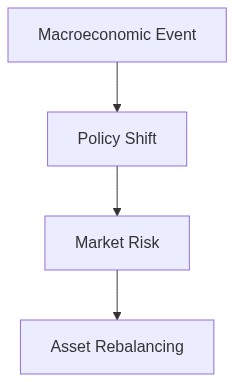
What Is the Optimal Portfolio Rebalancing Directive Given These Conditions?
Step 1 Asset Class Allocation should emphasize an overweight stance in equities within sectors demonstrating resilient pricing power and adaptability to labor cost inflation. Furthermore, integrate exposure to infrastructure projects that benefit from public and private sector collaboration under demographic policy shifts.
Step 2 Risk Mitigation & Hedging require enhanced vigilance in duration management within fixed-income portfolios. Leverage inflation-protected securities (TIPS) to dilute real interest rate risk, while employing derivatives to complicate liquidity-driven tail-risk.
Step 3 Embrace Strategic Commodities Exposure by infusing cyclical commodities into portfolios. Optimize access to markets through ETF structures and alternatives providing arbitrage opportunities within market contango phases.
By addressing these intricacies, we can distill inflationary pressures into actionable opportunities, mitigate pernicious risks, and offer an assertive response to evolving demographic and labor-induced economic landscapes.
| Strategy Dimension | Retail Approach | Institutional Overlay |
|---|---|---|
| Main Investment Vehicles | ETFs, Mutual Funds, REITs | Derivatives, Direct Real Assets |
| Risk Management | Diversification, Conservative Allocation | Active Hedging, Tactical Asset Allocation |
| Target Inflation Correlation | Moderate | High |
| Impact of Demographic Shifts | Indirect through market trends | Direct analysis on aging populations |
| Labor Market Influence | Secondary; via sector ETFs | Primary; macro assumptions on wage inflation |
| Portfolio Customization | Standardized, low-touch | Highly tailored, high-touch |
| Liquidity Considerations | High liquidity preferred | Lower liquidity acceptable for extended alpha |
| Cost Efficiency | Expense ratio focused | Cost of customization, execution accounted |
| Performance Metrics | Simple yield, total return | Risk-adjusted returns, Sharpe ratio |
| Operational Complexity | Low | High |