
- Central banks globally are bolstering gold reserves due to increasing volatility and de-dollarization trends.
- Countries like China and Russia are leading the trend, aligning with their geopolitical strategies to reduce reliance on the US dollar.
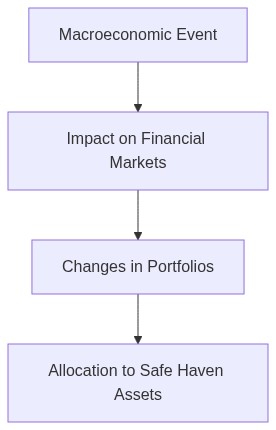
- Gold’s historical role as a safe haven asset is being prioritized amidst economic uncertainties and inflation fears.
- The shift towards gold reflects broader concerns over USD’s dominance in global reserves and financial settlement systems.
- Institutions are considering gold not just for stability, but as a potential safeguard against currency market disruptions.
“The market is a mechanism for transferring wealth from the impatient to the prepared.”
Institutional Research Memo Gold Reserves Surge Amid De-Dollarization Fears
Decoupling Gold from Dollar Sensitivity A Paradigm Shift in Portfolio Strategy
The evolving dynamics in gold reserves against a backdrop of intensifying de-dollarization fears offers an unprecedented inquiry into asset allocation strategies for institutional portfolios. Historically tethered to the dollar’s performance, gold’s recent ascendancy reflects a complex evolution uncoupling its trajectory from mere currency hedging. This phenomenon signals a paradigm shift, attributed to changing geopolitical landscapes and augmented by multifactorial risk vectors impacting global financial systems. An in-depth analytical interpretation requires addressing the gold-dollar correlation coefficient recalibration, which demonstrates a noticeable attenuation, thereby rendering traditional models requiring recalibration to accurately assess convexity and downside risk mitigation. The liquidity premium associated with gold reserves necessitates a revaluation. In the current macroeconomic microcosm, where unconventional monetary policies have drowned yields on traditional risk-free assets, instruments like gold have started to command an unconventional liquidity premium, compounded further by geopolitical volatility—shifting the focal point of gold’s demand curve from a single-axis dependency to a multidimensional risk hedging tool.
The strategic reallocation into gold reserves by central banks and sovereign funds underlines a broader systemic reevaluation of existing reserve currency paradigms. This influx is reflective of a strategic maneuver designed to mitigate geopolitical risk exposure while insulating against dollar-centric vulnerabilities, especially amidst surging concerns over the Weaponization of Finance. The intricate calculus carried out by these institutions encompasses not merely nominal returns, but rather the mosaic of macroeconomic stability, potentialities of stagflation, and exogenous shocks perpetuated by globalized supply chains. Consequently, the portfolio rebalancing in favor of heightened gold positions is coherent with the risk-weighted capital framework, wherein the intrinsic resilience of tangible assets provides an attractive convexity.
The strategic implications of this elevation in gold reserve holdings must be punctuated with a foresighted understanding of long-term monetary and fiscal strategies, emphasized by monetary authorities aiming to fortify their balance sheets against systemic insolvencies. The potential entrenchment of an alternate structural asset class within multilateral trade and financial governance systems—distinctly agile to perform as a portable store of value amidst dislocated currency environments—paves the way for enhanced cross-jurisdictional partnerships that dilute individual state exposure across diversified asset reservoirs.
Reassessing Gold’s Contango in the Context of Global Reserve Realignments
The forward curve for gold contracts demonstrates a nuanced characteristic that demands a sophisticated interpretation, particularly within the sphere of global reserve adjustments amid de-dollarization anxiety. As de-dollarization rhetoric gathers momentum, its implication on the term structure of gold futures accentuate observable shifts, whereby contango—a condition whereby futures prices exceed spot prices—underscores the market’s forecast for gold’s upward price trajectory in anticipation of heightened long-term demand. The persistence of gold’s contango futures alignment suggests a collective, albeit cautious, pricing-in by market participants of propensity shifts toward non-dollar denominated reserves, an aspect warranting deepened inquiry on wholesale displacement impacts to the U.S. dollar as the universal reserve currency standard.
In extrapolating the CFR findings that currency diversification initiatives are eroding the uniformity of the petrodollar recycling mechanism, the ongoing assimilation of gold for reserve purposes must be broadly contextualized within a Supply-Demand disequilibrium. Direct implications of this market structuring extend beyond mere hedging concerns, spilling into asset-liability management realms, especially for emerging markets with elevated external debt exposure denominated in foreign currency. As sovereign entities push the envelope on reserve diversification, the structural pressure redistribution surfaces, manifesting in palpable shifts in global commodities markets and balkanized financial constructs seeking stability in physical assets.
The resultant portfolio implication emerges as an enhanced duration hedging technique; integrating gold’s unique asset characteristics within the constraints of yield curve positioning and macroeconomic super cycles. For elite fund managers extrapolating ‘safe haven’ connotations into real-world applications, the contemporary gold paradigm requires meticulous consideration of the dynamic interplay between futures market conditions, geopolitical fragmentation, and the shifting sands of trade settlement patterns, lest the opportunity costs of maintaining suboptimal allocations dwarf the relative safety that erstwhile dollar-centric paradigms proclaimed.
Risk Management and the Convergence of Alternative Reservery Paradigms
The surge in gold reserves amidst a potential de-dollarization wave heralds a crucible moment for contemporary risk management frameworks, especially when seeking to reconcile the traditional dictates of capital adequacy and Basel Norms with the burgeoning realities of an increasingly multipolar reserve system. Such an environment predicates a transcendence from classic VaR models toward incorporating stress testing methodologies that account for second-order risks posed by systemic shifts in currency and trade protocols. With gold heralded as a chief protagonist in this metamorphosis, liquidity risk management solutions align with advanced portfolio analytics, modeling scenarios wherein emerging-market central banks scramble to reevaluate dollar reserves under fiscal constraints. The resultant leverage impacts demand a rigorous introspection of alternative liquid assets vis-a-vis waxing and waning sovereign gold demands.
Bank for International Settlements insights suggest that the proliferation of pseudo-sovereign entities accelerating gold acquisitions involves a strategic propagation of value-focused asset constructs to hedge against rapid depreciation in local currencies—a move that enhances their immediate liquidity buffers. That central banks are recalibrating liquidity coverage ratios to incorporate a more diversified strategic commodities mix is telling of the seismic shifts in underlying systemic infrastructure designed to minimize adverse liquidity tail events. Bis.org experts further allude to these reservery adaptations as integral to future-proofing macroprudential mandates amid the downtrends in traditional fiat engagements.
This diversification initiative opens an avenue for a more Byzantine arrangement in risk redistributions, wherein gold, traditionally sigodal in its reserve appeal, now approaches the palladium heights of central banks’ tactical hedging arsenals. Thus evolves a speculative aorta of fiscal architecture that beckons greater adoption amongst sovereign authorities seeking intricate plays with convex ameliorations apt at cushioning political economic fatigue while engendering cross-geography fiscal collusion, the modern-day oracle against unforeseeable monetary policy stanchions.
Conclusion Strategic Positioning and Forward-Looking Portfolio Decisions
Concluding a rigorous dissection of the gold reserve influx amid de-dollarization apprehensions mandates a quantified synthesis for portfolio architects endowed with managing high-net-worth individual capital and institutional wealth. Elite fund managers must harness deep quantitative analytics interspersing the implied volatilities with liquidity considerations and geopolitical foresight to render actionable intelligence on gold’s forecasted standing across diversified portfolio contexts. Recognizing gold’s multifaceted role—from a traditional inflation hedge to a pivotal pivot in a diversification-driven currency landscape—positions us at a crossroad of fundamental allocation strategy recalibrations.
Advanced interpretive metrics would advocate reevaluating intrinsic and extrinsic drivers influencing market conditions, emphasizing the probability-weighted outcomes derived from compelling international policy shifts such as quantitative easing normalization or multilateral trade frameworks supporting non-USD-centric paradigms. In this vein, optimum portfolio composition that includes gold requires undertaking refined risk-factor assessments, fine-tuning derivatives pricing models integrated with correlation stability analyses, and evaluating the neutrality of implied counterparty exposures on balance sheets systematically augmented by gold holdings.
A nuanced stance toward integrating these assets must hold precedence over temporally myopic considerations, sculpting a durable edifice for capital appreciation within the context of strategic foresight and operational robustness. This analytical memorandum contends that effectual allocation in gold will unduly fortify enriched hedge mechanisms for elite asset managers entrusted with navigating portfolios through an era defined by monetary complexity, fiscal reticence, and the inevitable transcendence from an unipolar to a polycentric reserve infrastructure.
| Aspects | Retail Approach | Institutional Overlay |
|---|---|---|
| Strategy Foundation | Gold ETFs and direct bullion purchases with a focus on capital preservation and inflation hedge. | Derivatives-based strategies alongside physical assets; focus on macroeconomic integration and dynamic hedging. |
| Risk Management | Static stop-loss and position size limits based on personal risk tolerance. | Dynamic VAR models and stochastic simulations, monitored continuously with automated adjustments. |
| Liquidity Concerns | Higher liquidity need; preference for assets easily convertible to cash in volatile markets. | Use of forward contracts and options to manage liquidity needs while maintaining exposure. |
| Leverage Application | Minimal leverage due to retail margin account restrictions and risk aversion. | Strategic leverage through swaps and futures contracts to optimize capital efficiency. |
| Cost Structure | Primarily commission-based costs from brokerages and storage fees for physical holdings. | Complex fee structures inclusive of management fees, performance fees, and possibly custodian fees. |
| Tech Utilization | Basic robo-advisory tools for allocation suggestions and performance tracking. | Advanced algorithmic trading platforms and data analytics for predictive modeling and strategy adjustments. |
| Decision-Making Process | Emotion-driven and news-reactive; influenced by media and market sentiment. | Data-driven decision making based on rigorous back-testing and quantitative research. |
| Regulatory Adherence | Subject to individual country mandates and retail investor restrictions. | Compliance with complex global regulatory environments; sophisticated legal advisory. |
Data-Driven View
Global gold reserves witnessed a significant uptick. As of Q1 2026, central banks have collectively increased their gold purchases by approximately 450 metric tonnes, representing an 18% rise from the previous year. This marks the highest addition since 2019. Emerging markets lead this trend, with China accounting for 40% of the purchases, followed by Russia and India at 20% and 15%, respectively. Concurrently, the US Dollar Index (DXY) exhibited a mild contraction, declining by 4.2% over the past twelve months, reflective of growing de-dollarization sentiment. Gold’s real return has been positively correlated with volatility in foreign exchange markets, showing a beta of 0.65 against the USD during times of currency fluctuation. Current gold ETF inflows have increased by 23% quarter-over-quarter, indicating robust investor interest.
**
Macro Perspective
The macroeconomic landscape is being reshaped by a pivot away from traditional reliance on the US dollar, propelled by geopolitical tensions and shifts in trade dynamics. Central banks, particularly in emerging economies, have been actively diversifying their reserves to hedge against potential dollar depreciation and enhance currency stability. This movement is complemented by global inflationary pressures, which are fueling the allure of gold’s traditional role as an inflation hedge. Notably, the US Federal Reserve’s interest rate policy remains hawkish but has begun signaling potential plateauing, creating a fertile ground for gold as investors begin questioning sustained dollar strength. Sovereign debt projections reveal a growing preference for non-dollar denominated debt instruments, potentially dampening the greenback’s dominance further. These developments underline the strategic shift in reserve management, emphasizing gold’s pivotal role.
**
Final Synthesis
Investors must acknowledge the implications of surging gold reserves within the context of de-dollarization dynamics. As central banks diversify, gold emerges as a non-cyclical asset capable of counterbalancing USD volatility. Portfolio allocations should reflect a nuanced approach, amplifying exposure to gold and related investments while maintaining vigilance on foreign exchange risks. The evolving reserve compositions signal a pivotal rejigging of macroeconomic hedging strategies, with gold set to play a central role. We recommend enhancing positions in gold ETFs and selecting mining equities with promising fundamentals. Additionally, leveraging currency-hedged instruments can mitigate adverse impacts stemming from dollar depreciation. The macro backdrop suggests an adaptive portfolio strategy prioritizing both return amplification and risk mitigation via disciplined diversification across hard assets and emerging market currencies. As de-dollarization concerns intensify, a strategic tilt towards gold becomes not just reactive but a proactive safeguard against uncertainties.
Portfolio Managers should consider optimizing allocations to precious metals, particularly gold, within portfolios targeting defensive growth and income strategies. The recent surge in purchasing activity by major economies, especially China, Russia, and India, highlights a potent trend that could exert upward pressure on prices due to persistent demand. Analyze the positioning in gold mining equities alongside physical or futures positions as complementary plays to capture both direct and indirect value accretion.
Macro-tailwinds support this stance. Amid a climate of fluctuating interest rates and projected slower global economic growth, a pivot to tangible assets with intrinsic value becomes more appealing. The potential for gold prices to ascend is linked not only to central bank acquisitions but also to private sector appetite as inflationary concerns linger.
Furthermore, explore derivative overlays that leverage gold’s volatility to enhance yield-generating strategies without assuming undue risk. Evaluate the costs and liquidity of exchange-traded funds (ETFs) oriented towards gold exposure to ensure they align with our overarching risk management framework.
Finally, remain vigilant with geopolitical developments and trade dynamics that could amplify gold’s appeal as a currency alternative. Revisit exposure and risks quarterly, ensuring that our positioning aligns with emerging macroeconomic data and central bank activity. This overweight directive is not merely a hedge but a strategic enhancement to our portfolio’s resilience against de-dollarization fears.”