
- Emerging market bonds attract attention due to high yields amidst global inflation.
- Geopolitical tensions and supply chain re-shoring drive emerging market appeal.
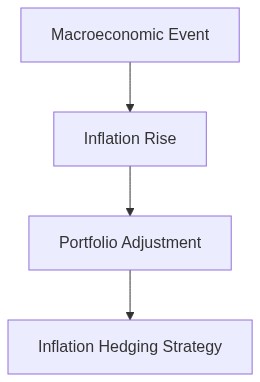
- Institutional investors shift focus to alternative inflation hedging assets.
- Emerging markets benefit from diversification away from traditional assets.
- Risk factors include currency volatility and geopolitical instability.
“Risk cannot be destroyed; it can only be transferred or mispriced.”
The Renaissance of Yield: Shifting Appetite for Emerging Markets Amid Global Rate Volatility
The allure of emerging market bonds has taken a significant turn in recent years, underscored by a seismic shift in global fixed-income investment dynamics. This evolution can largely be attributed to the changing landscape of global interest rates, led by the Western economies, which have grappled with unprecedented monetary policies and fiscal stimuli. As institutional investors reevaluate their portfolio construction strategies in this new environment, emerging market bonds have emerged as both a compelling and necessary consideration. The nuances of these bonds, particularly their yield curves, often present a stark contrast to those of developed markets, offering a diversified duration and convexity profile that can be advantageous in portfolios seeking to mitigate interest rate risk while optimizing yield.
The appetite for yield in the face of global rate normalization, especially as the Federal Reserve and the European Central Bank contemplate tightening cycles, has driven capital flows into higher-yielding emerging market assets. The resultant compression in spreads has, paradoxically, heightened risks of contagion, as the macroeconomic conditions in emerging countries do not necessarily adhere uniformly. Therefore, the liquidity premium demanded by investors compensates not only for credit risk but also for idiosyncratic market risks that are inherently amplified in less-developed financial systems. The Bank for International Settlements elaborates that, “investors need to be acutely aware of the maturity profiles and refinancing risks that such emerging market debt can embody,” highlighting the importance of due diligence in managing duration risk BIS Report.
Moreover, the macroeconomic foundation of many emerging markets has shown remarkable resilience, with several countries boasting GDP growth rates that outpace those in advanced economies. This economic backdrop, coupled with improving fiscal management and governance, has reinforced investor confidence, catalyzing an unseen surge in demand for emerging market bonds. Nonetheless, this surge is not without its critics, who argue that external vulnerabilities and currency risks remain potent disruptors. The inherent volatility and foreign exchange exposure associated with emerging market debt necessitate sophisticated hedging strategies, necessitating fund managers to leverage tools such as currency swaps and options to navigate the treacherous waters of international currency markets effectively.
Risk-Reward Realignment: Deconstructing the Yield Curve and Spread Dynamics of EM Bonds
In dissecting the underlying mechanisms that have facilitated the rise of emerging market bonds, it is imperative to explore the interdependencies within yield curves and the dynamics of spread widening or narrowing. The intricacies of these movements are nuanced and can vary substantially across different economies. With a recalibration of risk premia, particularly given the tapering of quantitative easing programs in developed markets, emerging market bonds have generated significant attention due to their capacity to deliver enhanced returns in an environment where traditional fixed-income returns are increasingly compressed.
The yield curve of an emerging market is a reflection of both domestic economic forecasts and external credit perceptions. As inverted yield curves have become associated with impending recessionary environments in advanced economies, emerging markets present a more varied and often positively sloped curve, signifying economic expansion expectations. However, the risk-adjusted return on these bonds requires careful analysis of credit spreads and the ‘term spread’, which serves as an indicator of market sentiment regarding future economic conditions. JP Morgan’s EM Bond Index Emerging notes, “while yield spreads have tightened over recent years, the potential for macroeconomic stress-tests in EMs remains, necessitating close monitoring of country-specific risk factors” JP Morgan.
The liquidity of emerging market bonds is another pivotal consideration. While liquidity in developed markets is bolstered by institutional volume and trading infrastructure, emerging markets often face liquidity constraints. This liquidity premium, though, represents an opportunity for investors to capture outsized alpha. Active management and agility in trading strategies are crucial, as is the adept use of derivatives to hedge positions, optimally timed market entries, and exit strategies. The impact of geopolitical tensions and currency devaluation must also be factored into investment decisions, given their capacity to precipitously alter bond valuations and investor sentiment in these markets.
Financial Stability and Regulatory Challenges: Navigating the Complex Interplay in EM Bonds
The emergence of heightened interest in emerging market bonds exists within a broader spectrum of regulatory challenges and financial stability concerns. The global financial ecosystem, post-pandemic, is markedly interconnected, with the narrative of ‘decoupling’ between developed and emerging markets achieving only limited credence amidst global trade and economic interdependencies. The regulatory landscape governing emerging market bonds has seen pivotal changes, with many countries instituting measures to enhance transparency and reduce systemic risks.
Despite these advancements, the reality of capital controls and differing sovereign ratings has impeded the seamless integration into global bond indices. Enhancements in market infrastructure and cross-border capital transaction policies remain areas where further progress is needed. Critics of emerging market bond investments routinely underscore potential sovereign default risks exacerbated by political instability and the overarching ‘debt trap’ associated with foreign-denominated bonds, particularly in settings where local currencies struggle against the appreciation of the U.S. dollar or other reserve currencies.
As part of mitigation efforts, multilateral institutions such as the International Monetary Fund (IMF) have extended credit lines and implemented economic policy advice to bolster financial resilience. The IMF’s strategy of encouraging currency diversification and prudent macroeconomic frameworks is pivotal in assuring investors of robust risk management practices. An IMF publication reports, “Enhancing stability in emerging markets is contingent on both internal policy structuring and external support mechanisms that ensure liquidity and fiscal stability amidst fluctuating global economic cycles.”
Strategic Positioning and the Prospects of Emerging Market Bonds Within a Diversified Portfolio
In light of the current climate surrounding emerging market bonds, strategic positioning within a diversified portfolio has never been more critical. The narrative surrounding these assets is evolving, shaped by both investor perception and the underlying economic fundamentals that support emerging market growth stories. As advanced economies exhibit signs of potential stagflation and monetary tightening, the relative attractiveness of emerging markets is expected to remain substantial, although not without volatility-induced turbulence.
Elite fund managers are advised to take a meticulous approach, focusing on selective exposure that incorporates rigorous country-specific analysis and sectoral allocations. The creditworthiness of sovereign and corporate issuers demands a granular level of scrutiny, while macroeconomic factors, including inflation expectations and fiscal policy trajectories, play instrumental roles in determining asset allocation. The ‘convexity’ of emerging market bonds, or the degree of sensitivity to interest rate changes, provides a mechanism to harness potential upward repricing during periods of declining rates or deepening crises within developed markets.
In conclusion, the unseen surge of emerging market bonds presents both an opportunity and a challenge. Navigating these dynamics necessitates a deep understanding of global macroeconomic conditions, geopolitical risk factors, and individual country risk assessments. The potential for outperformance, whether through yield differentials or capital appreciation, presents a compelling case for inclusion within sophisticated investment portfolios. As market participants continue to digest the evolving landscape, the resurgent interest in emerging market bonds is poised to redefine the contours of global fixed-income strategy in the years that lie ahead.
| Criteria | Retail Approach | Institutional Overlay |
|---|---|---|
| Access to Markets | Limited access through retail brokerages, often indirect exposure via ETFs or mutual funds. | Direct access to emerging market bonds through specialized platforms and instruments. |
| Research and Analysis | Relies on readily available research reports and news sources, limited depth. | In-depth research capabilities with access to proprietary data and analytics. |
| Risk Management | Basic risk management strategies, often limited to diversification within a portfolio. | Advanced risk management techniques, including hedging strategies and risk-adjusted metrics. |
| Investment Horizon | Shorter-term focus, often influenced by retail sentiment and market news. | Longer-term strategic view, aligned with institutional investment mandates. |
| Cost Efficiency | Higher transaction costs per unit due to smaller trade sizes and often higher fees. | Lower transaction costs due to economies of scale and negotiated fee structures. |
| Liquidity Needs | High liquidity preference, with a focus on easily tradable instruments. | Can endure lower liquidity levels in pursuit of strategic long-term gains. |
| Performance Measurement | Performance often analyzed through basic return metrics. | Rigorous performance attribution analysis, assessing risk-adjusted returns. |
| Customization | Limited customization, often constrained to available products. | High degree of portfolio customization based on specific institutional needs. |
| Capital Availability | Limited capital, often influenced by individual savings capacity. | Significant capital from pooled institutional resources. |
| Regulatory Constraints | Less complex regulatory environment, focusing on individual compliance. | Complex regulatory requirements necessitating dedicated compliance teams. |