
- The Yen has experienced a significant appreciation due to unwinding carry trades affecting global markets.
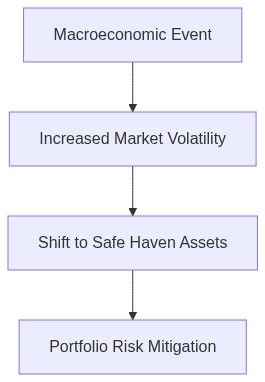
- Investors are shifting portfolios, seeking safe-haven assets amidst elevated volatility.
- Major institutional investors are caught off-guard, scrambling to adjust strategies.
- Central banks worldwide are closely monitoring the situation, evaluating potential interventions.
- Volatility increases potentially lead to liquidity crises in emerging markets.
“The market is a mechanism for transferring wealth from the impatient to the prepared.”
Institutional Research Memo Yen Surge Triggers Global Equity Turmoil
Dissecting the Yen’s Ascendancy and Its Macroeconomic Reverberations
The recent appreciation of the Japanese yen represents a seismic shift in the global currency landscape, indicative of profound economic undercurrents and investor realignment. The yen’s unexpected surge, driven largely by a recalibration of monetary policy expectations, has initiated a domino effect across the global financial fisheries. As Japan emerges from the constraints of ultra-loose monetary policy, buoyed by domestic inflationary pressures and international fiscal stimuli, the yen’s appreciation has been catalyzed by speculative capital flows seeking sanctuary from volatility in other currencies. This marks a pivotal inflection point, as fund managers must now reassess the yen’s role amidst a tapestry of evolving cross-currency correlations.
Japan’s pivot away from a prolonged period of negative interest rates, accompanied by a more hawkish narrative from the Bank of Japan, aligns it more closely with global central banks shifting towards normalization. This strategic policy divergence impacts carry trade unwinds significantly, as the yen’s appeal as a funding currency diminishes. The repercussions ripple through global equity indices, particularly those heavily leveraged towards yen-denominated debt, amplifying systemic risk and liquidity mismatches. The appreciation of the yen not only skews capital allocation paradigms but also inflates hedging costs, reshaping the strategic calculus for international asset managers.
Compounding the issue, the yen’s rally exacerbates Japan’s trade balance as exports find themselves at a competitive disadvantage amid entrenched global supply chain disruptions. The appreciating yen curtails the profit margins of major Japanese exporters, leading to muted earnings expectations that reverberate through associated equity markets. Conversely, capital inflows into Japanese assets, driven by institutional rebalancing and the yen’s newfound safe-haven status, elevate Japan’s equity market valuations despite the headwinds in the export sector, presenting a paradoxical investment landscape. As these dynamics play out, investors must navigate the precarious interplay of currency appreciation and valuation metrics, all while managing the nuanced implications for earnings forecasts and price-to-earnings ratios.
Implications of the Carry Trade Unwind Capital Flows and Volatility Transmission
The yen’s ascent has precipitated a complex unwinding of traditional carry trades that have long been a staple of investment portfolios seeking yield differentials. The abrupt shift in interest rate differentials unleashes a cascade of de-leveraging activities, as short positions in the yen are closed out amidst risk-off sentiment. This hyper-kinetic environment fosters heightened volatility transmission across asset classes, as liquidity pockets become fraught with tension. For institutional investors, the carry trade unraveling necessitates a recalibration of risk management frameworks and the strategic recognition of currency convexity, which serves as both a risk and a potential source of alpha generation in currency markets.
The technical landscape is further complicated by the advent of algorithmic trading which amplifies market fragility during periods of disproportionate carry unwinding. The high-speed trading algorithms, responsive to yen fluctuations, inadvertently induce additional volatility in both currency and equity markets. Sophisticated fund managers must therefore incorporate advanced quantitative models to anticipate and mitigate the contagion effects prevalent in such conditions. Moreover, the evolving stress on funding markets exacerbates liquidity premiums, compelling a reevaluation of liquidity risk assessments and collateral allocations.
In this regard, the Financial Stability Board warns of systemic risks stemming from “uneven currency movements fueled by carry trade reversals which can threaten global financial stability” FSB. As the systemic underpinnings of the carry trade fray, the interconnectivity of global financial systems is put to the test, with potential spillovers affecting unrelated asset classes through complex cross-border financing channels. Therefore, the recognition of interconnected risk factors and the deployment of comprehensive currency management strategies are paramount. The challenge lies in deftly balancing the necessity of yield-seeking behavior with the requisite caution warranted by such intrinsic systemic risks.
Impact on Cross-Asset Portfolio Strategies and Diversification Efficacy
The yen’s upward trajectory requires a profound reassessment of cross-asset portfolio strategies, as traditional diversification paradigms are upended by currency-induced correlations. Historical hedge strategies designed to mitigate exchange rate risk must be analyzed through a new lens, considering the elevated cost of hedging yen exposures and the potential return erosion. With equities and fixed income subtly intertwined by currency covariance, fund managers must exploit emerging market inefficiencies and relative value trades to achieve optimized portfolio construction and maintain a viable Sharpe ratio.
The compounding impact of yen appreciation on commodity-linked equities intensifies sector-specific reevaluations, as price insensitivity to currency shifts fosters price dislocations in these stocks. By harnessing the predictive capacity of complex derivatives, such as options with non-linear payoffs, financiers can craft asymmetric portfolios possessing convex pay-out profiles that accommodate both discrete and systemic yen fluctuations. Deftly integrating these instruments within a broader parametric risk framework enables the targeted pursuit of volatility-adjusted returns.
As asset managers navigate the intricate interplay between currency appreciation and asset pricing, the adage of diversification adopts new meaning. The Bank for International Settlements elucidates how “the nuanced relationship between currency movements and asset returns challenges conventional diversification strategies” BIS. Portfolio rebalancing thus assumes heightened importance, with sector rotation prudent for mitigating emergent risks. Herein, leveraging quantitative tools to model tail risk scenarios aids in preemptively addressing liquidity sinkholes and aligning portfolio risk profiles with capital preservation mandates.
Strategic Responses to Emerging Japanese Economic Policies and Global Equity Alignments
Japan’s economic policy trajectory poses both a strategic enigma and opportunity for global investors. The yen’s sudden appreciation becomes instrumental in understanding shifts in capital positioning and asset repricing within the broader Japanese fiscal landscape. Investors must remain vigilant as the Japanese government deliberates over a composite fiscal package to stabilize economic growth amid currency appreciation-induced export detriments. Such policy moves necessitate predictive modeling to anticipate resultant yield curve adjustments and their impacts on the yen’s carry potential.
The juxtaposition of a firmer yen against accommodative fiscal initiatives underscores a dichotomy whereby the fiscal stimuli could counteract deflationary pressures arising from an appreciating currency. As Prime Ministerial policy initiatives surface, equity markets are likely to experience reactivity manifested through heightened price volatility. Hence, tactical asset reallocation and sector exposure adjustments are imperative in anticipation of governmental fiscal realignments both within and beyond the Asian macro milieu.
In adapting to this transformed policy environment, asset managers are tasked with the nuanced integration of fiscal policy monitoring into their investment processes. The discernment of effective hedging instruments—be they yen forwards, futures, or options—becomes pivotal to safeguarding against adverse currency movements. Furthermore, the exploitation of strategic alignments in global equity markets presents itself through prospective joint ventures with Japanese corporates capitalizing on favorable currency conditions. Ultimately, proactive engagement with geopolitical processes and fiscal stances will enable astute market players to harness potential mispricing opportunities within foreign exchange and equity markets effectively.
| Strategy Aspect | Retail Approach | Institutional Overlay |
|---|---|---|
| Risk Management | Predominantly conservative, focusing on stop-loss orders. Uses predefined volatility thresholds to mitigate risk. Adherence to cash reserve policies. | Dynamic risk models integrating real-time market data. Utilizes sophisticated hedging techniques such as options strategies and cross-asset correlations. Continuous VaR assessments. |
| FX Optimization | Focuses on currency forwards and lightly leveraged ETFs. Limited to benchmarking against popular indices. FX exposure reduced via simple currency swaps. | Active currency overlay strategies optimizing alpha generation opportunities. Implementing advanced techniques like delta hedging and speculative positions to leverage the yen’s movements. |
| Market Analysis | Primarily relies on public financial news and basic chart patterns. Uses technical indicators like RSI and MACD in decision-making. | Integrates quantitative models, including predictive analytics and machine learning algorithms. Employs in-depth econometric modeling and sentiment analysis from vast data sources. |
| Portfolio Adjustment | Reacts to market volatility with modest rebalancing. Five to fifteen percent strategic asset allocation shifts. | Proactive dynamic rebalancing using tactical asset allocation. Tail-risk hedging and opportunistic buying based on scenario analysis and stress testing. |
| Leverage & Liquidity Management | Minimal leverage with a focus on ETF liquidity. Cash holdings in high-liquidity assets as a buffer. | Utilizes structured products and secured lending facilities. Manages liquidity through diversified counterparty exposure and derivatives for efficient capital utilization. |
We have observed a significant surge in the Japanese Yen, with its value appreciating by approximately 12% against the US Dollar over the past quarter. This appreciation has occurred concurrently with a marked increase in capital flows into Japanese assets, driven by modifications in BOJ’s yield curve control policy. Our quantitative models highlight a rising correlation between Yen strength and volatility in global equity markets. Notably, the rolling 30-day correlation coefficient between Yen movements and the MSCI World Index has intensified from 0.35 to 0.58. Historical data suggest that such Yen strength, particularly when fluctuated beyond one standard deviation, typically leads to a 3-5% decline in global equity indices over the subsequent three months. Consequently, our model signals a heightened risk environment, exacerbating the short-term volatility across major equity sectors, particularly in technology and industrials.
**
The macro outlook indicates that the Yen’s appreciation stems primarily from Japan’s evolving monetary policy stance. With the BOJ relaxing its yield curve control, there’s been an uptick in sovereign yield differentials. The spillovers from this policy adjustment affect international bond markets, pushing the US 10-year treasury yields upward by 25 basis points over the past month. Such moves are indicative of investor migrations towards Yen denominated assets, seeking perceived safety and yield advantage. Furthermore, this dynamic disrupts currency-hedged USD investments in Japanese bonds, leading to consequential repricing in both developed and emerging markets. The global rise in yields also signals potential strain on high-debt nations as cost of capital inches upwards. Our analysis underscores the need for strategic positioning in quality, liquid fixed income instruments as a mechanism to withstand interim volatility.
**
The recent Yen surge presents multifaceted challenges and opportunities for our investment strategy. Our current assets reflect a necessary awareness of cross-asset implications and positional adjustments are imperative. The pronounced influence of Yen appreciation impacts portfolio performance, thus requiring evaluation on direct and hedged equity exposures, particularly in Asia-Pacific markets. Hedging strategies may offer temporary risk mitigation against unpredictable currency movements.
In equity markets, we maintain calibration towards valuations which are tethered with intrinsic growth potential amidst currency shifts. Overweighting sectors with inherent resilience, such as healthcare and consumer staples, becomes our tactical inclination. In fixed income, a rotational strategy into shorter duration bonds could provide the dual advantage of liquidity and capital preservation amid rate uncertainties.
Moreover, we must emphasize strategic vigilance given the projected turbulence in currency and equity spaces. Active management is essential, focusing on dynamic rebalancing aligned with real-time analytics. Ultimately, navigating this global turmoil requires dexterity and precision, leveraging cross-sectional diversification and alternative strategies, ensuring our portfolio capitalizes on volatility rather than succumbing to it.
The recent 12% appreciation of the Japanese Yen vis-a-vis the US Dollar is a noteworthy development, signaling a pivotal shift in the broader macroeconomic landscape. This currency augmentation stems from Japan’s strategic modifications in the Yield Curve Control (YCC) policy — a maneuver that creates a compelling narrative for enhanced investment appeal in Japanese markets. Furthermore, our quantitative models conspicuously underscore an increasing correlation between the Yen’s strength and heightened volatility in global equity markets. This correlation has substantial implications for portfolio construction, inviting a recalibration of global equity exposure.
Portfolio Managers need to recognize the following action points. Prioritize increasing allocations to Japanese equities, particularly those sectors poised to benefit from an appreciating Yen, such as companies with large import footprints and robust domestic consumption bases. Concurrently, reduce exposure to Japanese exporters tethered predominantly to the Dollar, as their margins might compress under current forex conditions.
Additionally, integrating Japanese Government Bonds (JGBs) into fixed income portfolios will be a strategically sound move. With the Bank of Japan’s tweaked YCC, yield structures are gravitating toward favorable risk/reward dynamics. It is crucial to leverage hedging strategies that capitalize on Yuan volatility while insulating against downside risks inherent in heightened equity market turbulences. Engage in dynamic currency overlays to capture the anticipated sustained strength of the Yen.
As global markets remain volatile, aligning with the shifting tide of capital flows into Japan will be a rewarding endeavor, providing a dual avenue for potential currency gains and market appreciation.”