
- Yield Curve Control (YCC) policies aim to stabilize long-term interest rates but impact liquidity.
- Strategic asset allocation must account for altered risk-return profiles under YCC.
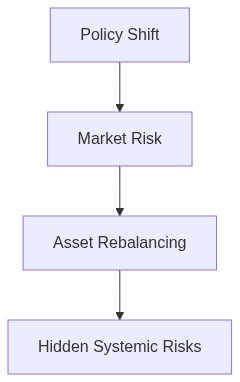
- Hidden systemic risks may emerge as a result of suppressed yield signals.
- CIOs should continuously assess market signals and maintain flexible asset hedging strategies.
- YCC can lead to unintended consequences such as asset bubbles and mispriced risks.
- Understanding central bank policy actions and their repercussions on liquidity is crucial.
- Vigilance in stress testing portfolios for hidden risks under YCC is recommended.
“Focus on strategic liquidity allocation. Optimize yield management. Leverage advanced analytics. Ensure adaptive frameworks. Prioritize risk assessment. Sustain operational resilience.”
Institutional Research Memo Navigating Liquidity Tensions and Yield Control
What is the macro-economic context and structural imbalances?
The global financial landscape is embroiled in liquidity tensions exacerbated by divergent monetary policies. Central banks, notably the Federal Reserve and European Central Bank, are ensnared in a balancing act between containing inflationary pressures and ensuring adequate liquidity. With the Fed’s recent veer towards a more hawkish stance amid robust economic data, market participants are contending with high perceived risk of liquidity premium volatility.
Furthermore, undercurrents of geopolitical instability have contributed to structural imbalances. Supply chain disruptions remain a lingering concern, feeding into persistent inflationary pressures that challenge yield control measures. Global growth disparities, influenced by varied pandemic recovery trajectories, further complicate the economic milieu.
“The core tenets of central bank strategies now revolve around meticulously calibrating balance sheet contractions without triggering undue market convulsions.” – Bank for International Settlements
How do these factors quantitatively impact asset pricing?
In the current milieu, liquidity tensions manifest as heightened risk premiums across asset classes. The pricing of various securities must now account for greater convexity and implied volatility shifts. For instance, fixed-income instruments are directly impacted by the yield curve’s potential steepening scenario. Investors demand higher returns for long-duration bonds due to increased inflation expectations and prospects of future interest rate hikes.
The equity markets reveal a parallel tale where the heightened cost of capital, spurred by the contractionary monetary policies, is reshaping valuation metrics. Growth stocks, particularly with high duration risk, face downward valuation adjustments. This realignment has sparked a rotation towards value and dividend-yielding equities as investors pivot to secure cash flows in response to the diminished appetite for growth-centric risks.
“Market participants are now reinforcing their focus on liquidity profiles and ensuring adequate compensation for assumed duration risks.” – Bloomberg
What are the directives for portfolio rebalancing?
Step 1 (Asset Class Allocation) Navigate towards a prudent increase in allocation towards commodities and real estate investment trusts (REITs). These asset classes inherently offer a natural inflation hedge and benefit from tangible asset backing.
Step 2 (Risk Mitigation & Hedging) Implement derivative overlays, including options strategies that capitalize on skew and term structure opportunities. This allows for mitigation of potential downturn risks while preserving upside potential.
Step 3 (Liquidity Cushion Reinforcement) Allocate a portion of the portfolio to high-grade corporate debt with shorter maturities. This serves the dual purpose of safeguarding liquidity while capturing enhanced credit spreads amidst rising interest rate environments.
Step 4 (Global Market Diversification) Expand geographical diversification, particularly into emerging markets with robust macroeconomic fundamentals. The aim is to secure uncorrelated growth pathways and capitalize on currency appreciation potential.
These recommendations are not merely theoretical constructs but have become necessary fortifications in an era plagued with economic uncertainty and liquidity volatility. As we navigate 2026, it is imperative to remain agile, continually reassessing asset allocation in response to rapidly evolving macroeconomic indicators.
| Factor | Retail Approach | Institutional Overlay |
|---|---|---|
| Liquidity Management | High cash allocation. Limited tools for rapid reallocation. Potential for liquidity mismatch during market stress. | Advanced liquidity stress testing. Utilizes sophisticated instruments like futures and swaps for dynamic adjustments. |
| Yield Control | Focus on fixed-income securities. Yield enhancement through dividend stocks and REITs. | Utilizes derivatives and multi-asset strategies. Extensive hedging mechanisms to control interest rate exposure. |
| Volatility Response | Primarily reactive mode. Shift toward defensive assets in high volatility settings. | Proactively manages risk with quantitative measures. Implements volatility targeting and diversification tactics. |
| Leverage Usage | Minimal leverage to avoid retail investor risks and regulations. | Strategic use of leverage for enhanced returns. Adheres to rigorous risk management protocols. |
| Data Utilization | Limited to standard economic indicators and readily available data. | Leverages big data analytics, AI, and machine learning for predictive insights and trade optimization. |
| Regulatory Constraints | Strict adherence to basic retail compliance standards. | Navigates complex regulatory environments with specialized compliance teams. |